 📦 Στείλε Δέμα — Δες Τιμή Άμεσα
How to Send a Parcel Abroad Without Mistakes (5-Step Checklist)
No Comments
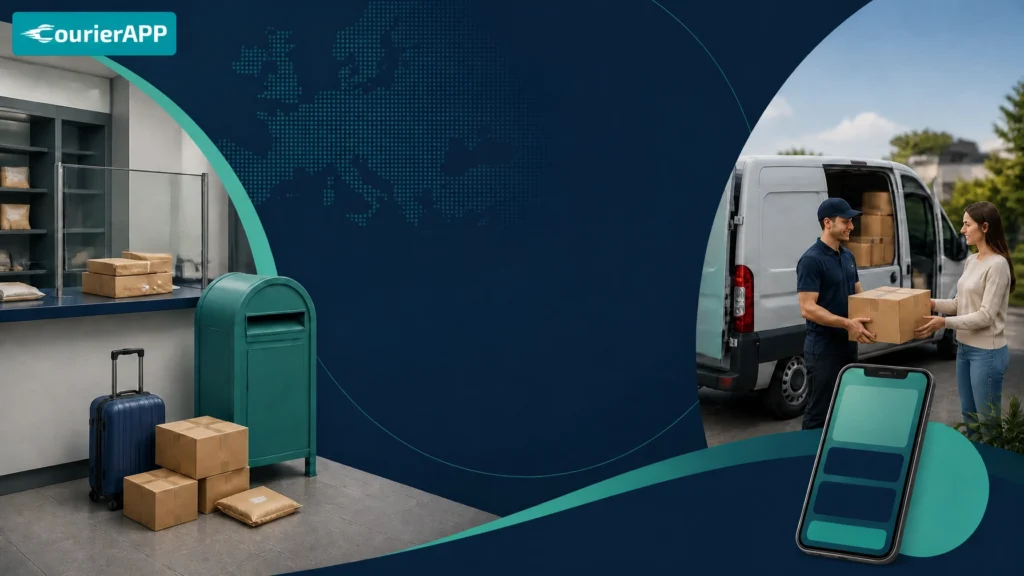
Learning how to send a parcel abroad without mistakes is easier than it looks, as long as you follow the right steps from the very beginning. This guide walks you through preparing, declaring and shipping your parcel safely and at the lowest possible price in 2026.
The 5 steps to send a parcel abroad without mistakes
The whole process comes down to a clear, repeatable sequence. When you respect the order of these five steps, you avoid customs delays, extra charges and returned parcels.
First, check exactly what you are shipping and whether it is allowed for the destination. Second, pack it properly and measure it accurately. Third, enter the recipient details correctly in your booking. Fourth, prepare any required customs documents. Fifth, have the parcel ready for collection and keep the tracking number safe.
Each of these steps removes a common point of failure. Together, they turn an intimidating task into a routine you fully control.
Delivery times and tracking when you send a parcel abroad
When you want to send a parcel abroad without mistakes, delivery time depends on the destination and the service you choose. Within the European Union a parcel usually arrives in 2 to 4 working days, while destinations outside the EU can take 5 to 8 days because of customs checks.
Tracking is your most important tool after shipping. Always keep the tracking number and check the status daily. If a parcel is stuck in customs, a document or a value declaration is usually missing.
A well-organised shipment gives you notifications at every stage: collection, transit, customs clearance and final delivery. That way you know exactly when to alert the recipient and you avoid unnecessary waiting.
What you can and cannot ship
To send a parcel abroad without mistakes, before you book, make sure the contents are allowed for the specific country. Every destination has its own list of prohibited items, and ignoring it is one of the most common reasons for confiscation.
Clothes, books, electronics without lithium batteries, small quantities of cosmetics and gifts are generally allowed. Liquids, sprays, lithium batteries, perishable food, medicines and valuables without insurance are restricted or require special handling.
If you are shipping something unusual, ask in advance. A simple confirmation saves days of delay and the risk of losing the parcel at customs entirely.
Cost-saving checklist
If your goal is to send a parcel abroad without mistakes, the final cost is determined less by the carrier and more by how you prepare the parcel. A few small moves noticeably reduce the price.
Check the following before you book: shrink the box dimensions to the minimum, weigh accurately to avoid volumetric surcharges, compare prices from different carriers, skip express services when you are not in a hurry, and group small items into one parcel instead of many.
Finally, declare the value correctly: an excessively high declaration increases duties, while a falsely low one can void your insurance in case of damage.
Common mistakes when you send a parcel abroad without mistakes
For anyone trying to send a parcel abroad without mistakes, most problems do not come from the carrier but from small oversights by the sender. Knowing them in advance keeps your shipment smooth.
The most frequent mistake is an incomplete or wrong recipient address, which leads to a return. Others include poor packaging, incorrect content declaration, a missing proforma invoice for non-EU countries, and underestimating delivery time during peak periods.
With a simple final check of all details before collection, you eliminate almost every possible delay and make the shipment smooth from start to finish.
Packaging: the foundation of a flawless shipment
When you want to send a parcel abroad without mistakes, packaging is the most underrated factor of a successful shipment. A parcel travels thousands of kilometres, changes many hands and is stacked with dozens of others, so it has to endure.
Use a sturdy box that fits the contents without too much empty space. Fill the gaps with bubble wrap or paper so nothing moves. For fragile items, wrap each piece separately and mark the box as fragile.
Seal all joints with strong tape in an H shape and remove old labels or barcodes from reused boxes, because they confuse automated sorting systems.
How to calculate dimensions and volumetric weight
To send a parcel abroad without mistakes, many senders are surprised when the charge does not match the actual weight. This happens because carriers charge based on the greater of actual and volumetric weight.
Volumetric weight is calculated by multiplying length x width x height in centimetres and dividing, usually, by 5000. A large but light parcel can therefore cost more than you expect.
To avoid this hidden cost, choose the smallest possible box that safely holds the contents. A few centimetres less on each side can noticeably reduce the final price.
Customs and duties outside the EU
If your goal is to send a parcel abroad without mistakes, when you ship outside the European Union, customs becomes a decisive factor. A correct customs declaration is what separates a smooth shipment from one stuck for days.
Fill in the description, quantity and real value of the contents accurately. Add the correct tariff code (HS code) where required and clarify whether the parcel is a gift or a commercial shipment, because it changes the tax treatment.
Inform the recipient in advance that they may be asked to pay duties or VAT on delivery. This avoids surprises and refusals that lead to a return.
Insurance and compensation
For anyone trying to send a parcel abroad without mistakes, for valuable items, insurance is not a luxury but a necessity. The carriers’ basic cover is often limited and does not cover the full value.
Declare the value correctly and keep purchase receipts or photos of the contents before packing. In case of damage or loss, these details speed up compensation.
Combining proper insurance with careful packaging and an accurate declaration, you complete a shipment without unanswered risks.
Choosing the right service to send a parcel abroad
The final price and speed differ significantly depending on the shipping method. National post is economical for small parcels with no rush, but often slower. Large courier companies such as DHL offer speed and reliable tracking at a higher cost.
CourierAPP automatically compares the prices of many carriers and gives you the most cost-effective option for each destination, without wasting hours searching. That way you get courier speed at a price much closer to standard post.
For more details, see our guide on cheap parcel delivery abroad, the article on the cheapest way to send a parcel abroad, and the most common parcel shipping mistakes to avoid.
Quick final checklist before you ship
Before you hand over the parcel, spend one minute on a final verification. This habit is the secret to send a parcel abroad without mistakes, again and again.
Check that the recipient address is complete and correct, the contents are allowed for the destination, the packaging is sturdy and well sealed, the weight and dimensions are entered accurately, and the customs documents are ready where needed.
Also make sure you have kept the tracking number and that the recipient has been informed. With these simple steps, you turn a process that seems complex into a routine you fully control.
Step 1 in detail: confirm contents and restrictions
The first step to send a parcel abroad without mistakes is knowing exactly what is inside the box. It sounds obvious, but vague or inaccurate contents are a leading cause of customs trouble.
List every item, its quantity and approximate value. Cross-check each one against the destination country’s prohibited and restricted list. Batteries, liquids, food and branded goods are the categories most likely to cause problems.
If anything is borderline, contact the carrier before booking. Five minutes of checking now can prevent a parcel being held, returned or destroyed later.
Step 2 in detail: packing and accurate measurement
Once you know what you are shipping, focus on protection and accuracy. Choose a box that matches the contents, leaving just enough room for cushioning.
Wrap fragile items individually, fill voids with paper or bubble wrap, and seal every seam with strong tape. Then measure length, width and height precisely and weigh the finished parcel on a reliable scale.
Accurate measurements are not a formality. They determine your price and prevent surprise surcharges when the carrier re-measures the parcel at the depot.
Step 3 in detail: booking and recipient details
When you want to send a parcel abroad without mistakes, the booking stage is where small typos cause big problems. A single wrong digit in a postcode can send a parcel to the wrong city or trigger a return.
Enter the recipient’s full name, complete address, postcode and an active phone number. Double-check the country and any apartment or unit details. Add clear delivery instructions if the address is hard to find.
Take a moment to review the entire booking before you confirm. This is the cheapest insurance you will ever buy against avoidable delays.
Step 4 in detail: customs documents
For shipments outside the EU, documents are as important as the parcel itself. The core document is the proforma invoice, which describes the contents and their value.
Make sure the description matches what is physically inside, add HS codes where required and state whether the shipment is a gift or commercial. Keep copies attached to the parcel and saved digitally.
Correct paperwork is the difference between a parcel that clears customs in hours and one that sits in a warehouse for a week waiting for clarification.
Step 5 in detail: collection and tracking
The final step is handover and follow-up. Whether you drop off the parcel or schedule a pickup, confirm the collection details in advance.
Save the tracking number immediately and share it with the recipient. Check the status at key milestones rather than obsessively, and act quickly only if the parcel stalls at one stage for too long.
By treating tracking as an active tool rather than a passive feature, you stay in control of the shipment until it is safely delivered.
Shipping to popular destinations from Greece
To send a parcel abroad without mistakes, destinations behave differently, and a little local knowledge goes a long way. Shipments within the EU, such as to Germany, Cyprus or Italy, move freely without customs duties, so speed and price are the main variables.
Shipments to the United Kingdom now involve customs formalities after Brexit, so a proforma invoice and accurate value declaration are essential. For long-haul destinations like the United States or Australia, factor in longer transit times and possible import taxes.
Matching the service to the destination is a core part of learning to send a parcel abroad without mistakes, because the right choice for one country is rarely the right choice for all.
Post vs courier vs CourierAPP: which one wins
The final price and speed vary a lot by method. National post suits small, light, non-urgent parcels of low value, where cost matters more than speed.
Couriers excel when you need speed, reliable tracking and insurance for valuable items. The challenge is that comparing every carrier manually is slow and tiring.
This is exactly where CourierAPP helps: it compares many carriers in seconds and shows the cheapest reliable option for your specific parcel and destination, so you get the best of both worlds.
What to do if a parcel is delayed or lost
Even with perfect preparation, a delay can occasionally happen. The goal is to react correctly and quickly rather than panic.
First check the tracking to see which stage the parcel is at. If it is stuck in customs, find out whether a document is missing. If the estimated delivery time has passed, open a trace request with the carrier using the shipment number.
Because you kept all the shipment details organised from the start, resolving these incidents becomes far faster and any compensation claim much easier to support.
How to estimate the real cost before you book
If your goal is to send a parcel abroad without mistakes, a realistic cost estimate prevents unpleasant surprises at checkout. Start with the actual weight and the volumetric weight, then use the higher of the two as your billable weight.
Add the destination zone, the service level and any surcharges for remote areas or customs handling. Only then compare quotes, because a low headline price can hide fees that make it more expensive overall.
A quick comparison across carriers for your exact parcel gives you the true cost in seconds and removes the guesswork from budgeting your shipment.
Tips for online sellers and frequent shippers
For anyone trying to send a parcel abroad without mistakes, if you ship regularly, a smart strategy translates directly into profit. The decision should be made per order, not once and forever.
Set simple rules: choose a courier for urgent or high-value orders, and use economy post for small, inexpensive products. Use comparison tools to automate the decision and save time on every shipment.
That way you optimise both your shipping cost and your customers’ experience, without sacrificing reliability or speed when it matters most.
Building a reliable shipping routine
The real secret to send a parcel abroad without mistakes is consistency. When every shipment follows the same checklist, errors become rare and predictable.
Keep a simple template of your steps, store your common recipient addresses, and save proof of value for anything important. Over time, what once felt complicated becomes a fast, confident routine.
Treat each shipment as a small project with a clear start and finish, and you will ship faster, cheaper and with far fewer headaches to any destination in the world.
Why preparation beats luck every time
Shipping internationally rewards the prepared, not the lucky. The senders who consistently send a parcel abroad without mistakes are simply the ones who never skip the basics.
They confirm restrictions, pack with care, measure honestly, declare accurately and keep their tracking close. None of these steps is difficult on its own; the value comes from doing all of them every single time.
Adopt the same discipline and you will save money, avoid stress and protect both your parcels and your reputation with recipients, whether you ship once a year or every day.
Measure once, pay the right price
Before you send a parcel abroad, calculate the volumetric weight — (length × width × height in cm) ÷ 5000 — and compare it with the actual kilos; carriers always bill the higher of the two. If measuring feels like a chore, photograph the box next to an A4 sheet and let CourierAPP’s AI estimate the dimensions for you: it is a starting estimate you confirm before paying, and the photo is used only to price the shipment. Honest numbers upfront mean a VAT-inclusive price with no adjustment surprises later.
One final habit that separates smooth shipments from stressful ones: keep a short record. Save the tracking number, the pickup receipt and two photos of the packed box in a notes app until delivery is confirmed. If anything needs clarifying with support — an address correction, a customs question, a damage claim — you will have every reference at hand and the issue is resolved in minutes instead of days. Send a parcel abroad with this small routine and even a rare hiccup becomes a quick fix rather than a lost afternoon.
How do I send a parcel abroad without mistakes?
Follow five steps: check the contents, pack and weigh correctly, enter the details accurately, prepare the documents and keep the tracking number.
Which documents do I need for non-EU shipping?
For countries outside the EU you need a proforma invoice with a description and value of the contents, and in some cases a customs declaration as well.
How much does it cost to send a parcel abroad?
The cost depends on weight, dimensions, destination and speed. By comparing carriers through CourierAPP you find the cheapest available option.
)
&description=&image=https://courierapp.gr/wp-content/uploads/2026/06/MXneQ7OmRRj-1024x576.webp)