📦 Calculate shipping price

Send Documents Abroad by Courier: The Guide for Professionals Who Can’t Risk Delays
No Comments
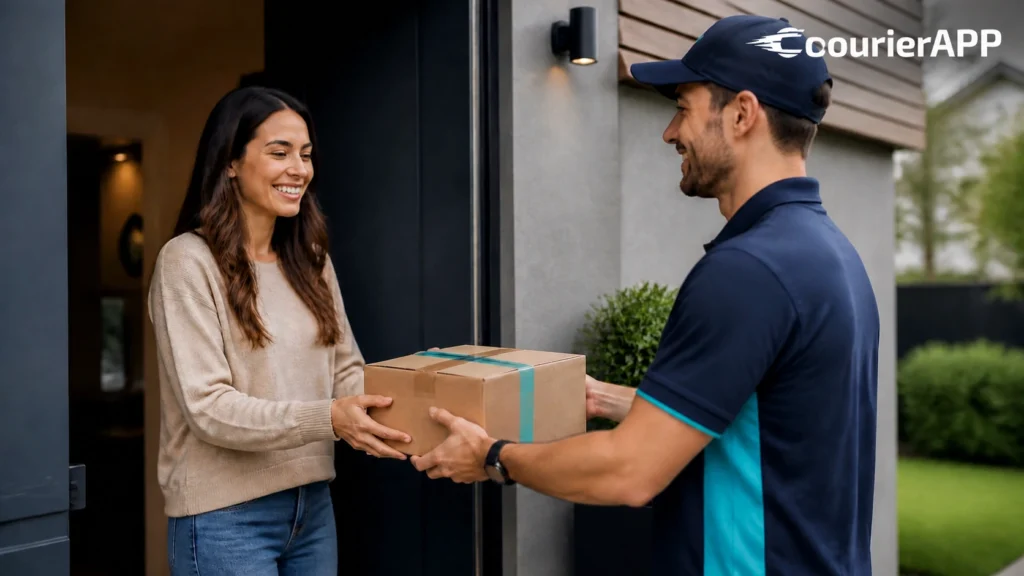
When you need to send documents abroad by courier, the stakes are usually high. A contract has to reach a partner by Friday. An offer needs a signature before it expires. An original certificate must be delivered to a client outside Greece. That’s when the practical question arises: “Do I just put it in an envelope and send it by regular post?” For business shipments, an international courier is not a luxury. It gives you a clear process, tracking and proof of delivery when time and responsibility matter.
CourierAPP arranges door-to-door shipments to 220+ destinations worldwide, with pickup from your office or home and delivery to the recipient’s address. You choose a service, enter the details and see the current price including VAT before you complete your booking.
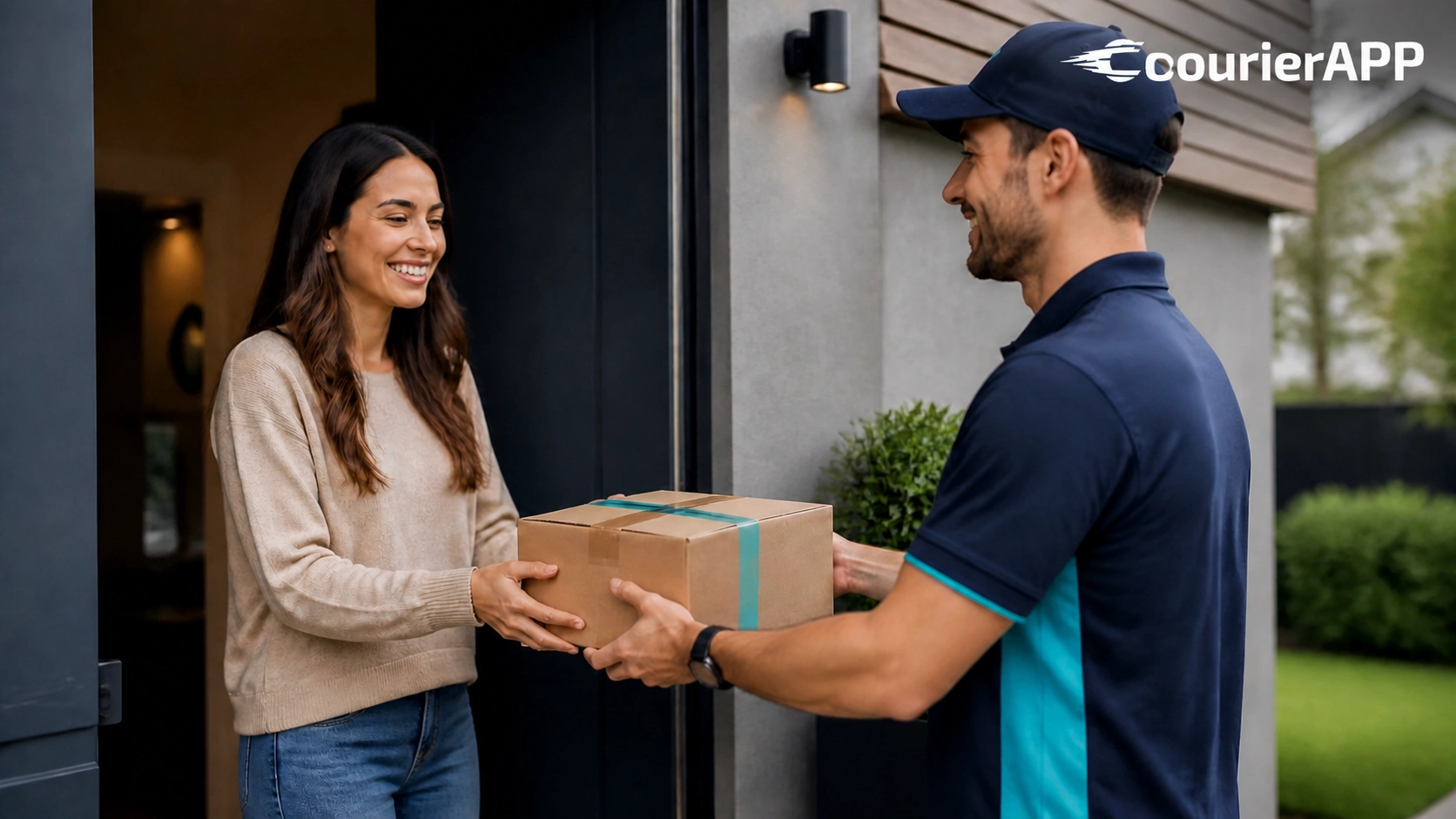
Why send documents abroad by courier instead of regular post?
Regular post is fine for a postcard. For a signed contract, it leaves too much to chance. Standard letters often have limited or no tracking, no pickup from your office and no clear proof of delivery. If something goes wrong, it is hard to find out where the envelope is.
When you send documents abroad by courier, you get a pickup at a time that suits you, a tracking number from the first scan to the final delivery, and a delivery confirmation you can file. For a law firm, an accountant or a company with deadlines, that visibility is worth more than the difference in price.
There is also a practical benefit: nobody from your team has to leave the office, queue at a counter and fill in forms by hand. The whole process takes a few minutes in the app.
Why business documents are a special category
An envelope may weigh almost nothing but contain a document of great business or legal value. Original contracts, signed agreements and certificates are not easy to replace. A delay can affect a partnership, a deadline or a compliance procedure.
That’s why a business document is never just “a few papers”. It needs:
- an accurate contents description,
- safe packaging,
- reliable pickup,
- tracking along the whole route,
- proof of delivery where required,
- an organised record for accounting or the legal department.
In other words, the document is not just an object. It is a responsibility that travels from your office to the recipient.
What businesses usually send
Business document shipments cover many different cases. Companies and professionals typically send:
- contracts and agreements,
- signed offers,
- invoices and accounting records,
- certificates and attestations,
- degrees and official documents,
- original powers of attorney,
- case files for law or accounting firms,
- small samples in protective packaging,
- disks or USB sticks with accompanying documents.
An envelope counts as a shipment. The price is calculated from the destination, the selected service and the chargeable weight. So even when the contents are light, you need to declare the dimensions of the envelope or package correctly.
Send documents abroad by courier: three different needs
Not every shipment needs the same speed or the same internal process. The right choice depends on what you want to achieve.
When time is everything: Express
Choose Express when there is a specific deadline, signing date, offer expiry or a critical legal or administrative procedure. It suits original contracts, documents that need an immediate signature and files that cannot wait.
Before you complete the booking, check the available delivery time for the destination. Transit times can be affected by the delivery area, working days and any checks on the route.
When cost matters: Economy
Economy is suitable when your schedule has some flexibility, for example for regular invoice shipments, partner files or non-urgent administrative material.
Choosing it does not mean giving up tracking. Tracking availability depends on the service and is shown at booking. For your business records, keep the shipment number together with the date and the recipient’s details.
When you need proof of delivery
For many businesses it is not enough to know that the envelope “left”. You need to prove it was delivered. This matters for law firms, accounting departments, procurement teams, internal audit and any company that keeps a contract archive.
So use tracking whether you choose Express or Economy, where it is available. After delivery, save the proof or delivery notification in your company records.
How it works for an office
The process is simple, but accurate details prevent most delays.
1. Describe the contents properly
Don’t just write “papers” or “documents” without further detail. Use a specific description such as “signed commercial contract”, “company certificates”, “accounting documents” or “original legal documents”. A real, clear description helps the shipment be handled correctly, especially when the destination is outside the customs union.
2. Enter the recipient’s full details
A business address should include the company name, the contact person’s full name, the full street address, floor or office number, postcode and city, the recipient’s phone number, and opening hours or delivery instructions. If the building has a reception, security or a dedicated delivery point, add a note.
3. Organise several parcels together
If you are sending several envelopes, or envelopes together with samples, to the same recipient, you can add up to 10 parcels to one booking with the “+ Add parcel” button. The price is combined and each parcel has its own tracking. For different recipients, you create a separate booking for each one.
This is useful for accounting and law firms sending bulky case files, for companies sending originals together with samples, and for e-shops sending documents and products to the same partner.
Packing documents without unnecessary risk
For ordinary documents, use a padded envelope or a flat cardboard document envelope. Originals should stay flat and be protected from folding, moisture and pressure.
- Put the originals in a plastic sleeve.
- Add a piece of stiff cardboard so the envelope does not bend.
- Use an envelope of the right size.
- Seal all sides well with tape.
- Add a “Do not bend” note where needed.
- Protect USB sticks or small samples separately.
- Avoid a large box with loose documents inside.
Before you seal the shipment, keep a digital copy of the documents, as long as your privacy policy and the nature of the case allow it.
What to avoid
The most common mistakes in business shipments are practical and easy to prevent:
- Sending an original without a copy or digital record.
- Using the wrong recipient phone number.
- Leaving out the floor, company name or opening hours.
- Describing the contents vaguely.
- Sending an important envelope by regular post without tracking.
- Leaving documents unprotected from moisture.
- Putting an envelope in a big box without internal support.
- Forgetting to tell the recipient the shipment is on its way.
Cost and volumetric weight
Documents are usually very light. The final price is mainly driven by the destination, the service and the size of the packaging. Volumetric weight is calculated as Length × Width × Height / 5000, in centimetres. If the package is large compared with its contents, you may be charged by volume instead of actual weight, so use a flat, right-sized envelope wherever possible.
For the current price including VAT, use the app: it is shown for your destination and service before you pay.
For businesses that ship often
If your office sends envelopes every week, the process needs to be repeatable. With CourierAPP you book online, schedule pickup from your premises, add up to 10 parcels per booking for the same recipient, track every shipment and keep a single view of your shipping costs. Your reception or accounting team no longer has to repeat the same routine at different counters.
Snap it. Ship it. Done.
To enter details even faster, you can use CourierAPP’s AI tools. Photograph a label or invoice and the AI reads the address for you, or photograph the package with an A4 sheet next to it and get an estimate of its dimensions and weight. These are estimates, not final measurements – you confirm the details before you pay.
The carrier re-weighs the shipment at the sorting hub. If there is a difference from what you declared, only that difference is adjusted. Photos are used only to calculate your shipment. See how it works on our page about how to ship a parcel with AI.
Send documents abroad by courier inside and outside the EU
The route affects the information you need. Within the EU – Cyprus, Germany, France or Italy, for example – there is no customs procedure. An accurate description, a full address and the recipient’s phone number are enough.
Outside the EU, for example to the UK, the USA or Switzerland, the envelope goes through customs. Plain documents with no commercial value are usually declared as “documents” and attract no duties. But if there are USB sticks, samples or other items with the papers, the parcel is treated as a goods shipment and needs a declared value.
For country specifics, see our guides to shipping from Greece to the UK and shipping from Greece to the USA.
Personal documents: degrees, certificates and authorisations
It’s not only businesses. Students send degrees and transcripts to universities, employees send certificates to employers, and families send authorisations to relatives living abroad.
If the document needs certification or a Hague Apostille, get it done before shipping, so the envelope doesn’t have to travel twice. Ask the recipient whether they need the original or whether a certified copy is enough. Often the copy is fine and the original stays safe in Greece.
Delivery times and tracking
When you send documents abroad by courier with CourierAPP, shipments travel with DHL and FedEx, with a tracking number for every envelope. The time shown at booking is an estimate that depends on the destination, the service and working days. It is not a guaranteed time, so leave a margin when there is a deadline.
You can find more about international express services on the DHL Express website. In practice, an envelope handed to the courier early in the week is less likely to “lose” a weekend on the way.
Express or Economy for documents: quick comparison
| Criterion | Express | Economy |
|---|---|---|
| Best for | Contracts with deadlines, offers, court documents | Invoices, archive material, non-urgent files |
| Speed | The fastest available option | Slower, with a margin of days |
| Cost | Higher | Lower |
| Tracking | Yes | Yes, where available for the service |
| When to avoid it | When there is no time pressure | When there is a strict date |
Whichever service you pick, the decision to send documents abroad by courier should follow the deadline. The right choice depends on how much the date matters, not on the weight of the envelope. A contract that must be signed tomorrow justifies Express. A batch of invoices for a partner’s archive doesn’t.
Confidentiality and personal data
Many business documents contain personal or confidential information. When you send documents abroad by courier, protecting them starts with the envelope.
- Use an opaque envelope so the contents can’t be seen.
- Don’t write details such as “acquisition agreement” or client names on the outside. The declaration is enough.
- Send only what the recipient really needs, not the entire case file.
- Log internally who sent what, when and with which shipment number.
Three real-life scenarios
A law firm in Athens
A firm needs to send a signed power of attorney to a partner in London. It chooses Express, declares “signed power of attorney, documents, no commercial value”, keeps a scanned copy and files the proof of delivery with the case.
A company accounting department in Thessaloniki
Every month the department sends original records to the parent company in Germany. There is no time pressure, so it uses Economy and puts all the month’s envelopes in one booking to the same recipient, with separate tracking for each parcel.
A student in Heraklion
A student sends a certified copy of her degree with an Apostille to a university in the Netherlands. She keeps the original in Greece, ships the copy in a stiff envelope and gives the admissions office the tracking number.
In every case, the team chose to send documents abroad by courier with no trip to a counter, pickup from the door and full visibility of the route.
What to do if delivery is not completed
Even with good preparation, a delivery may not succeed at the first attempt. Usually the reason is practical: the office was closed, reception refused the envelope or a detail was missing from the address.
Check the tracking update and contact the recipient so they are available for the next attempt. If the address or phone number needs correcting, contact CourierAPP as early as possible. A quick reaction usually means a day or two of delay rather than a returned envelope.
How to brief the recipient
A short email or message to the recipient on pickup day makes a big difference. Include what the envelope contains and how many parcels to expect, the tracking number, the estimated delivery day, whether a signature or ID is needed at delivery, and who should sign and return the documents if required.
Checklist before you send documents abroad by courier
Before sealing the envelope, spend two minutes on this list. Most problems are not caused by transport but by something forgotten at the office: a missing signature, a wrong phone number or an original that should never have left.
- Have you kept a scanned copy of every page?
- Are all signatures, initials and stamps in place?
- Does the recipient need the original, or is a certified copy enough?
- Is the address complete, with company name, floor and phone?
- Is the envelope stiff and waterproof?
- Is the contents description specific?
- Have you sent the tracking number to the recipient?
Step by step: send documents abroad by courier with CourierAPP
- Open the app and choose the destination country.
- Declare an envelope or small package with its real dimensions and weight.
- If you have a label or invoice with the address, photograph it and let the AI fill in the details. You check them before continuing.
- Write a specific contents description.
- Choose Express or Economy and see the final price including VAT in about 30 seconds.
- Pay online and the courier collects the envelope from your office or home.
- Track the shipment and file the proof of delivery.
FAQ: send documents abroad by courier
How fast can I send documents abroad by courier?
It depends on the destination and the service. With Express, an envelope to European countries usually arrives faster than with Economy. The estimated time is shown at booking but is not guaranteed, so leave a margin when there is a deadline.
Do I need a customs declaration to send documents abroad by courier?
Not within the EU. Outside the EU, plain documents with no commercial value are declared as documents with a clear description. If the envelope also contains items such as USB sticks or samples, a declared value is needed and extra information may be requested.
Is there tracking if a document goes missing?
Yes. Every envelope has a shipment number for tracking the route and delivery. For business documents, keep the tracking number together with a copy of the booking and the proof of delivery.
Can I send several envelopes together?
Yes, up to 10 parcels to the same recipient in one booking, with a combined price and separate tracking for each parcel. For different recipients, you create a separate booking for each.
Do I need special paperwork for a business shipment outside the EU?
It depends on the contents and the destination. For plain documents you need an accurate description and correct sender and recipient details. If samples, USB sticks or other items are included, extra information may be requested.
CourierAPP ships to 220+ destinations worldwide. For bookings or questions, contact us at +30 2811 815025 or info@courierapp.gr.
Read also: