📦 Calculate shipping price

Laptop, mobile or power bank with international courier? What is and isn’t allowed with batteries
No Comments
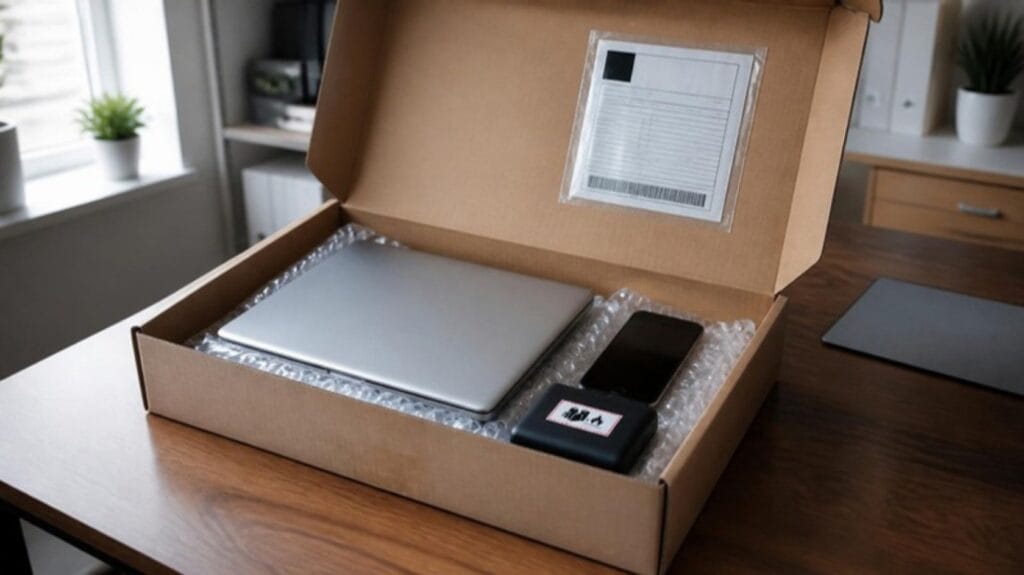
“Can I send a laptop with an international courier?” “Are mobiles and headphones allowed?” “What about power banks?”
These questions are absolutely reasonable. Lithium batteries are one of the most misunderstood aspects of international shipping, because the rules don’t just depend on the device. They also depend on whether the battery is installed in the device, packed alongside it, or being shipped on its own.
This article won’t repeat a general shipping guide. We’ll focus on compliance rules for electronics and batteries: what is usually allowed, what needs checking, and what should never go in an international parcel.
International courier and lithium batteries: the three main categories
The first distinction is how the battery is travelling.
1. Battery inside the device
The battery is installed in the device. Examples:
- Laptop with its built-in battery.
- Mobile phone or tablet.
- Wireless headphones inside their case.
- Smartwatch.
- Drone with the battery installed, provided the service and route allow it.
This is usually the easiest category to ship. The device must be fully switched off, protected from knocks, and packed so it can’t be accidentally switched on.
2. Battery packed with the device
The battery isn’t inside the device, but travels in the same parcel. For example, a spare camera battery in a box with the camera.
This category is more strictly controlled. The spare battery needs individual protection so its contacts don’t touch other metal objects or batteries. It also must not move freely inside the box.
3. Battery on its own
This covers standalone or loose batteries. A power bank sent on its own is treated as a separate battery, not just an accessory. The same applies to spare batteries, individual cells and battery packs.
These shipments are subject to much stricter rules. Many international courier services or specific networks do not accept them at all, especially for international air transport. Don’t assume a small power bank is automatically accepted just because it fits in your pocket.
What applies for each electronic device with international courier
Laptop
A laptop with an installed and intact battery can be accepted, provided the carrier’s and destination’s rules are followed.
Before you pack it:
- Switch it off completely. Don’t leave it in sleep mode.
- Disconnect chargers, USB devices and external accessories.
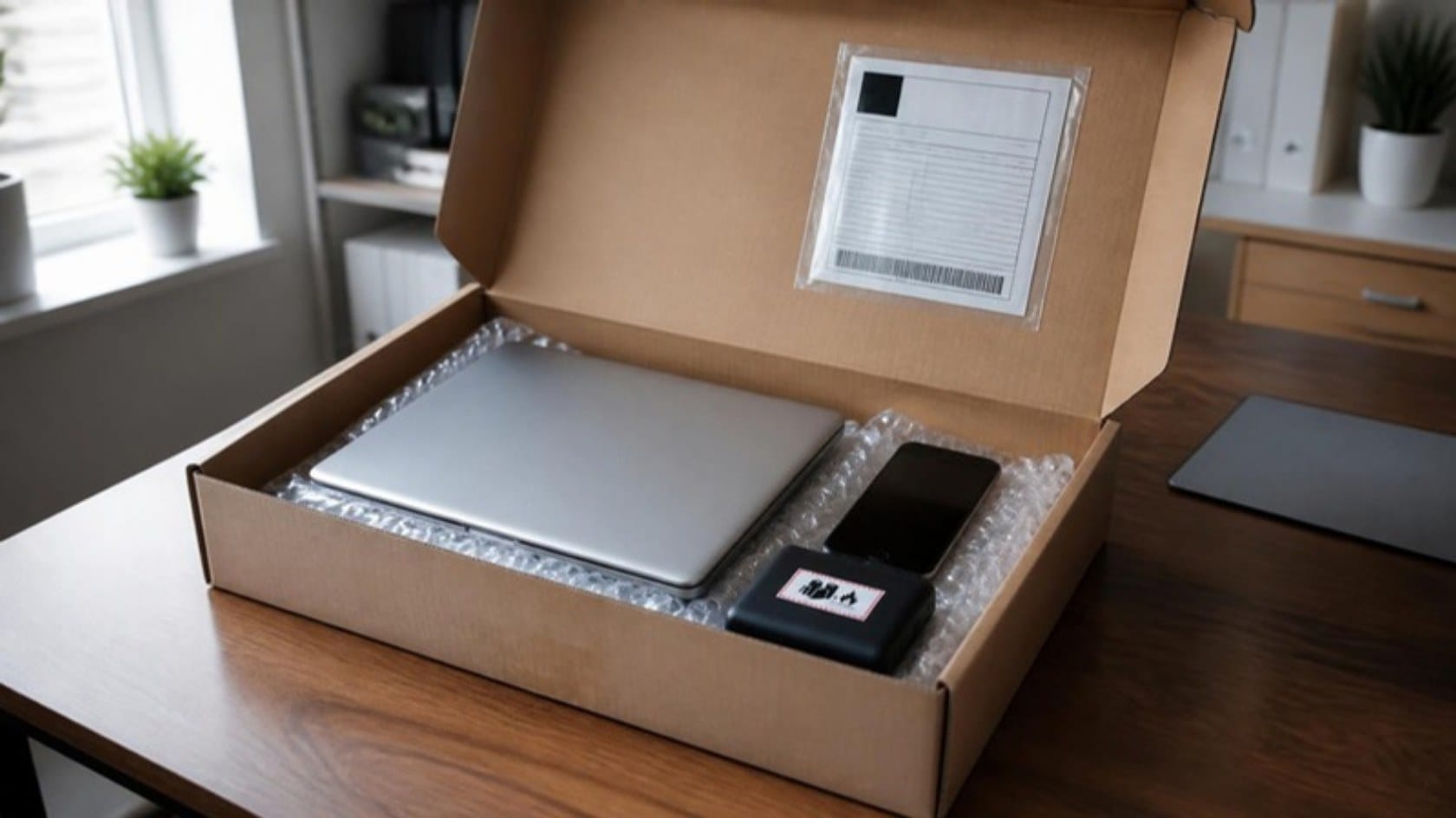
- Protect it with foam or bubble wrap.
- Place it in a rigid box with no empty spaces.
- Make sure it can’t open or switch on during transport.
If the battery is swollen, deformed, leaking or visibly damaged, the laptop must not be sent by air.
Mobile and tablet
Mobiles and tablets usually have built-in batteries. Switch them off, remove any loose accessories and wrap them separately. Don’t let them rattle around in a large box with books, clothes or metal objects.
Power bank
The power bank is the device that causes the most confusion. When sent on its own, it is considered a standalone battery. It is not treated like a mobile with a built-in battery.
Many services and routes do not accept it as a single item. If there is a power bank with another device, don’t hide it in the parcel. Declare it before booking, so it can be checked if it’s allowed by the specific DHL or FedEx service and by the destination.
Headphones and smartwatch
Wireless headphones and smartwatches usually have small built-in batteries. Switch them off and pack them in individual protective packaging. If there’s a charging case, pack it with the headphones so it can’t open or switch on accidentally.
Drone
A drone needs special attention. A drone with an installed battery and spare batteries are not treated the same way. Spare batteries are a stricter case, and on some routes or services may not be allowed.
Remove the battery only if the service’s instructions require it. Protect the contacts and don’t put spare batteries loose in the same box.
Electric scooter or bicycle
Electric bike and scooter batteries are usually much larger than those in a laptop or mobile. So don’t assume they can be sent with a simple parcel booking.
On most standard international courier services, an electric scooter or bike with a large battery needs special approval and is often not accepted. Contact us before packing the item.
E-cigarettes and vapes
Vapes and e-cigarettes contain a battery and may also be linked to liquids, atomisers or other components. The rules vary by carrier and destination. They should not be sent without prior confirmation.
In any case, a device with a swollen, damaged or leaking battery is prohibited. There is no “good packaging” that makes a dangerous battery suitable for shipping.
What can’t be sent with international courier
Do not put in the parcel:
- Swollen, damaged, leaking or recalled batteries.
- Individual loose cells without prior approval.
- Power banks sent on their own, without acceptance check.
- Flammable liquids and materials.
- Chemicals, solvents and cleaning agents.
- Sprays and aerosols.
- Matches, lighters and fireworks.
- Other materials that can ignite or react dangerously.
Don’t hide the contents or describe them as “accessories” if they contain a battery. Incorrect declaration can lead to seizure, return of the parcel or extra charges.
How to pack electronics correctly for international courier
Safe packaging has five key steps:
- Switch off: Fully power off every device and disconnect cables.
- Contact protection: For each separate battery, cover the contacts with insulating tape or use an individual case.
- Individual packaging: Don’t let devices and batteries touch each other.
- Shock-absorbing material: Use foam, bubble wrap or other suitable filling.
- Stability inside the box: There must be no free movement. If you shake the box and hear things moving, add more filling.
Use a rigid outer box and seal it with tape in an “H” shape. The manufacturer’s original packaging helps, but isn’t always enough as an outer box for the international sorting network.
Why rules differ by service and destination
Sources: international rules for lithium batteries are set by the IATA (Dangerous Goods Regulations) and detailed in the guidelines of the DHL Express and the FedEx.
Battery rules are not the same on every route. They may differ depending on:
- Whether the battery is inside the device or on its own.
- Whether a specific DHL or FedEx service is used.
- Whether the shipment travels by air.
- Whether the destination has extra restrictions.
- Whether special labelling, documents or prior approval are required.
For shipments outside the European Union, extra details about the contents may be needed. It’s not enough to write “electronics”. Describe the device and its condition accurately.
You can see the guide on how to send a parcel abroad for the general process. For this specific topic, though, the right move is to ask before booking the shipment.
Calculate volumetric weight correctly for international courier
The cost doesn’t depend only on the actual weight. For larger boxes, volumetric weight is also calculated:
Volumetric weight = Length × Width × Height ÷ 5000
Dimensions are measured in centimetres. The charge is based on whichever is greater: actual or volumetric weight.
On CourierAPP you can use AI as an assistant. With the message “Photograph. Send. Done.” you photograph the parcel and get an estimate of its dimensions and weight. The AI gives an estimate, not a final certification. The carrier will re-weigh the parcel at the sorting centre and only the difference is adjusted, if there is one. See more in the pillar for sending parcels with AI.
Before you book your international courier shipment
Use this quick checklist:
- Is the battery installed, packed with the device, or on its own?
- Is it intact, not swollen or leaking?
- Has the device been switched off?
- Are the contacts protected?
- Is everything stable inside the box?
- Have you declared the actual contents?
- Have you checked the specific service and route?
- Have you measured the box and calculated the volumetric weight?
If you’re sending a suitcase with electronics, also read the guide on mistakes when sending a suitcase. Proper preparation avoids delays, returns and unpleasant surprises.
CourierAPP serves shipments to 220+ destinations worldwide, with networks like DHL and FedEx. For acceptance checks of electronics or batteries, call 2811 815025, email info@courierapp.gr or visit courierapp.gr. For current prices, use the international parcel shipping price list.
Category: Guides
Related topics for internal linking:
- The ultimate guide to sending a parcel abroad
- Sending a parcel with AI
- Mistakes when sending a suitcase
📦 Get a courier quote for laptop or mobile abroad in 30 seconds
Delivery times and insurance when sending electronics with international courier
When sending a laptop, mobile or other electronic device with an international courier, delivery time depends on the service you choose. With DHL Express Worldwide or FedEx International Priority, a device usually arrives at its destination in 1-3 working days, while economy services (DHL Economy Select, FedEx Regional Economy) typically take 3-7 working days depending on the destination.
Because electronics usually have a higher value relative to their size, it’s important to declare the correct value of the device when booking. For declared values over €100, the carrier adds a declared value surcharge, which ensures that in case of loss or damage, compensation will match the actual value of the device and not just a standard minimum amount.
Once the courier collects the device, you receive a tracking number and can monitor the shipment’s progress until final delivery. For expensive electronics, it’s recommended to choose a service with recipient signature on delivery, so there’s confirmation the device was received by the correct person.
Common mistakes when sending electronics with international courier
The most common mistake is sending a lithium battery without correctly declaring it on the shipping form, which can lead to customs delays or even the return of the parcel. Always clearly state that the parcel contains a device with a lithium battery, so the carrier can apply the correct handling procedure.
The second common mistake is inadequate packaging; a laptop or mobile without foam protection around it risks damage during sorting, especially with multiple transfers between sorting centres. Always use the device’s original box if available, or a sturdy box with sufficient filling material.
The third mistake is sending a swollen or damaged battery, which is strictly prohibited by all carriers for fire safety reasons. If a device’s battery is damaged, it must not be sent by international courier under any circumstances, regardless of packaging.
Fourth, many users forget to clear personal data from the device before shipping. While not a carrier requirement, it’s recommended for data security to back up and factory reset your laptop or mobile before sending it to a new owner or for repair abroad.
DHL or FedEx for shipping electronics with lithium batteries?
Both DHL and FedEx are active carriers on CourierAPP and accept devices with built-in lithium batteries, provided packaging and declaration rules are followed. The choice between the two usually depends on delivery time and the price shown for the specific destination, as both companies apply similar IATA regulations for air transport of lithium batteries.
If you’re sending more than one electronic device — for example, a laptop and separate accessories — you can now organise them in one booking with multiple parcels, with a single price and separate tracking for each parcel, instead of booking separate collections for each item.
Do I need special insurance for an expensive laptop I’m sending abroad?
You don’t need a separate insurance policy; just declare the correct value of the device when booking, so the carrier’s coverage is automatically activated. For particularly expensive devices, you can ask support for more details about coverage limits before shipping.
Checklist before sending electronics with international courier
- The device’s battery is in good condition, with no signs of swelling or damage.
- You have clearly declared on the shipping form that the parcel contains a device with a lithium battery.
- The device is wrapped in foam inside a sturdy box, preferably the original one.
- You have declared the correct value of the device so the appropriate coverage is activated.
- If it’s a power bank on its own, you have checked the Wh limit allowed by the specific destination.
- You have kept the tracking number to monitor the shipment until delivery.
Following this list significantly reduces the chance of customs delays or rejection by the carrier, especially for shipments outside the European Union where lithium battery security checks are stricter.
How do rules differ by destination country for international courier with electronics
Within the European Union, sending electronic devices with built-in lithium batteries is a relatively simple process, with no customs procedures, as long as the carrier’s packaging rules are followed. For destinations outside the EU, such as the UK or USA, a customs declaration is required and there may be additional security checks, especially for devices with batteries, which can add 1-2 extra days to the total delivery time.
In any case, before organising an international courier shipment of an electronic device, it’s best to confirm the current restrictions for the specific destination country, as some countries apply extra restrictions on certain battery types or require special labelling on the parcel.
Can I send wireless headphones or a smartwatch without any problem?
Yes, wireless headphones and smartwatches contain very small lithium batteries and are generally accepted without special restrictions, as long as they are in their packaging or suitably protected. However, the same transparency rule applies: declare the contents correctly on the shipping form to avoid delays in sorting.
How long does it take to send a power bank on its own abroad?
A power bank travelling on its own, not accompanying another device, is subject to extra checks by some carriers due to air transport regulations for standalone lithium batteries. Delivery time is usually similar to other shipments (1-2 working days with express, 3-7 with economy service), but it’s best to confirm in advance that the specific destination accepts standalone power banks before booking.
In summary, sending a laptop, mobile or power bank with an international courier is perfectly feasible when the basic safety rules are followed: correct lithium battery declaration, suitable packaging, correct declared value and choice of carrier (DHL or FedEx) according to the desired delivery time. By following these steps, you avoid customs delays and ensure your device arrives safely at its destination.
If you’re unsure about the weight or dimensions of the box before booking, you can let the AI estimate them from a photo with an A4 sheet next to the parcel, with the carrier re-weighing and confirming the final weight upon collection.
Frequently asked questions about international courier with batteries
Can I send a laptop with an installed battery?
It’s usually accepted, provided the battery is intact, the laptop is fully switched off and it’s properly packed. The final rules depend on the carrier, service and destination.
Can I send a power bank on its own?
A power bank is considered a standalone battery and is treated more strictly than a mobile or laptop with a built-in battery. Many services do not accept it. Ask CourierAPP before booking and don’t declare it as a simple accessory.
What if the battery is swollen or damaged?
Don’t send it. Swollen, leaking or damaged batteries must not be transported by international air courier. Remove the device safely and take it to a suitable recycling or electrical waste facility.