📦 Στείλε Δέμα — Δες Τιμή Άμεσα
Courier or Post Office for Parcels: Which Is Cheaper?
No Comments
Choosing a courier or post office for parcels sent abroad determines both the cost and the speed of your shipment. This guide compares the two options in detail so you can confidently pick the cheapest and most reliable choice for your destination in 2026.
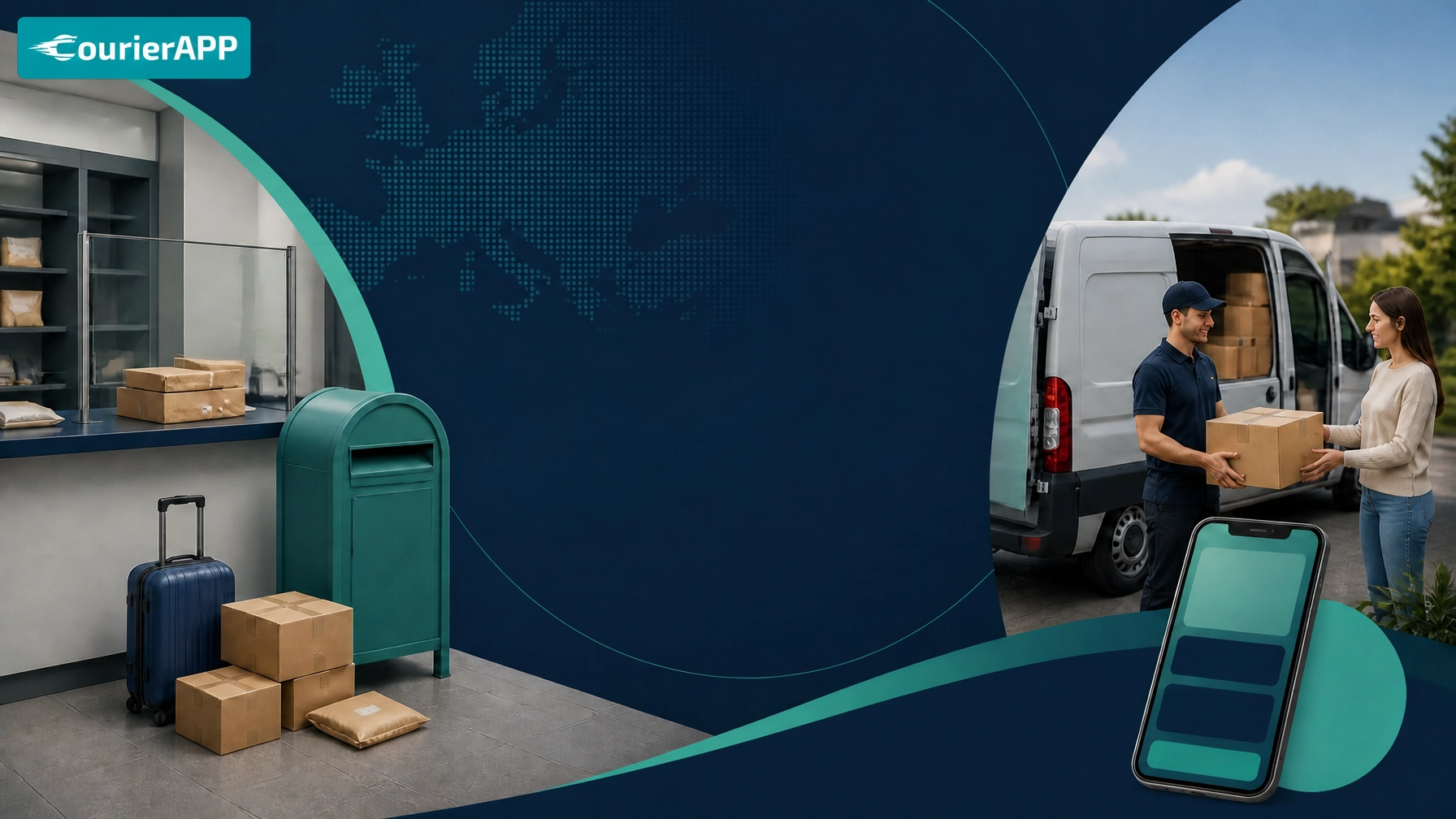
Courier or post office for parcels: what changes in 2026
The gap between a courier or post office for parcels has narrowed in recent years, but real differences remain. Couriers compete harder on price, while postal services have improved tracking on some routes.
Still, the core trade-off is the same: speed and reliability versus baseline cost. Understanding where each option wins helps you avoid paying too much or waiting too long.
The right answer is rarely fixed. It depends on the parcel, the destination and how quickly it needs to arrive, which is why a quick comparison beats a blanket rule every time.
The traditional choice: national post
When you compare a courier or post office for parcels, national postal services are the default for many senders. They are economical for small, light parcels and have an extensive drop-off network.
The downside is speed and visibility. Economy postal services can take one to two weeks internationally and may offer limited or no tracking, which is risky for anything valuable or time-sensitive.
For low-value, non-urgent items where price is the only priority, the post office often remains the cheapest starting point.
The fast choice: traditional couriers
Couriers such as DHL, FedEx and UPS focus on speed, reliability and detailed tracking. They typically deliver internationally in one to four working days.
They also provide stronger insurance options and proactive customs handling. The trade-off is a higher headline price, especially for one-off shipments without a business contract.
When deadlines or valuable contents are involved, the certainty a courier provides usually justifies the extra cost.
Delivery times and tracking compared
When weighing a courier or post office for parcels, delivery time is one of the most decisive factors. Couriers usually deliver in 1 to 4 working days, while economy post can take 5 to 15 days depending on the destination.
Tracking is the other big difference. Couriers offer detailed, milestone-by-milestone tracking, whereas many cheap postal services provide limited visibility once the parcel leaves the country.
If you or your recipient needs certainty about arrival, the richer tracking of a courier is a meaningful advantage worth paying for.
What you can and cannot ship
Regardless of whether you pick a courier or post office for parcels, every destination has its own list of prohibited items, and ignoring it causes delays or confiscation.
Clothes, books, gifts and electronics without lithium batteries are generally fine. Liquids, sprays, lithium batteries, perishable food and medicines are restricted or need special handling.
Before booking, confirm the contents are allowed for the specific country so you avoid unpleasant surprises at customs.
Cost-saving checklist
The final cost depends less on the provider and more on how you prepare the parcel. A few moves cut the price noticeably.
Always compare prices before booking, shrink the box dimensions, weigh accurately, skip express services when you are not in a hurry, and group small items into a single shipment instead of several.
A well-considered choice between a courier or post office for parcels, combined with careful packing, can save you a significant amount over a year.
Common mistakes when choosing courier or post office for parcels
Many senders focus only on price and ignore critical factors, ending up with delays or hidden fees.
The most common mistakes are comparing only the base price without surcharges, ignoring volumetric weight, declaring contents poorly, and choosing the slowest service for an urgent parcel.
Knowing these in advance makes the decision clearer and saves you the cost of the wrong choice.
Step by step: how to decide
To choose correctly, follow a simple logic. First define how urgent the shipment is and the value of the contents.
Then compare prices for the specific destination, check delivery times and the type of tracking, and finally estimate any duties for non-EU countries. With this data, the choice between a courier or post office for parcels becomes simple and well founded.
CourierAPP runs this comparison automatically, showing you the most cost-effective available option in seconds. See our guide on cheap parcel delivery abroad, the cheapest way to send a parcel abroad, and the most common parcel shipping mistakes to avoid.
When the post office wins and when the courier wins
There is no single answer for everyone. The post office wins for small, light, non-urgent parcels of low value, where cost matters more than speed.
The courier wins when you need speed, reliable tracking and insurance for valuable items. For business shipments with consistent requirements, a courier is usually the safer choice.
By matching the right service to each shipment, you secure the ideal balance of cost and quality every time.
Cost comparison by parcel type
When you analyse a courier or post office for parcels, the cost is never uniform. It varies by weight, volume, destination and the speed you choose.
For a small parcel up to one kilogram within the EU, the post office can be noticeably cheaper. As weight, value or the need for speed increase, the price gap shrinks and the courier becomes more competitive.
That is why a direct price comparison for your specific parcel is always more reliable than general assumptions.
Insurance and compensation in each case
Insurance is another factor that separates the two options. Couriers usually offer clear cover and a fast compensation process in case of damage or loss.
Economy postal services often provide limited or optional cover. If you are shipping something valuable, declare the value correctly and keep receipts so you can claim easily.
For items with high financial or sentimental value, the more complete insurance of a courier often justifies the extra expense.
Tips for online sellers and frequent shippers
For those who ship regularly, the right strategy translates directly into profit. The decision between a courier or post office for parcels should be made per order, not once and for all.
Set rules: choose a courier for urgent or expensive orders, and use economy post for small, cheap products. Use comparison tools to automate the decision and save time.
This optimises both your shipping cost and your customers’ experience, without sacrificing reliability.
Packaging tips that protect your parcel
Whichever option you pick when comparing a courier or post office for parcels, packaging quality determines whether your items arrive intact. A parcel travels far, changes many hands and is stacked with others.
Use a sturdy box sized to the contents, wrap fragile items individually, and fill empty space with paper or bubble wrap so nothing shifts. Seal every seam with strong tape in an H shape.
Remove old labels and barcodes from reused boxes, because automated sorting systems can misread them and misroute your parcel.
How to calculate dimensions and volumetric weight
Many senders are surprised when the charge does not match the actual weight. Carriers bill on the greater of actual and volumetric weight.
Volumetric weight is length x width x height in centimetres divided, usually, by 5000. A large but light parcel can therefore cost more than expected, regardless of whether you use a courier or the post.
To keep the price down, choose the smallest box that safely holds the contents. A few centimetres less on each side can reduce the bill noticeably.
Customs and duties for non-EU destinations
When shipping outside the European Union, customs becomes decisive. A correct customs declaration separates a smooth shipment from one stuck for days.
Fill in the description, quantity and real value accurately, add HS codes where required, and state whether the parcel is a gift or commercial. This applies equally to courier and postal shipments.
Tell the recipient in advance that they may owe duties or VAT on delivery, so the parcel is not refused and returned.
Shipping to popular destinations from Greece
Destinations behave differently. Within the EU, such as Germany, Cyprus or Italy, parcels move without customs duties, so speed and price are the main variables.
Shipments to the United Kingdom now involve customs formalities after Brexit, making accurate documents essential. For long-haul destinations like the United States or Australia, expect longer transit times and possible import taxes.
Matching the service to the destination is central to choosing well, because the best option for one country is rarely best for all.
How CourierAPP changes the cost equation
The hardest part of deciding between a courier or post office for parcels is comparing every option manually. It is slow, and most people give up after one or two quotes.
CourierAPP solves this by comparing many carriers in seconds and surfacing the cheapest reliable choice for your exact parcel and destination. You get courier speed at a price much closer to standard post.
Instead of guessing, you make a data-backed decision in moments, which is the simplest way to stop overpaying for shipping.
What to do if a parcel is delayed or lost
Even with perfect preparation, a delay can occasionally happen. The goal is to react quickly rather than panic.
Check the tracking to see which stage the parcel is at. If it is stuck in customs, find out whether a document is missing. If the estimated delivery time has passed, open a trace request with the carrier using the shipment number.
Because you kept the shipment details organised, resolving the issue and supporting any compensation claim becomes far easier.
Building a smart shipping routine
The real advantage comes from consistency. When every shipment follows the same checklist, errors become rare and costs become predictable.
Keep a template of your steps, store common recipient addresses, and save proof of value for important items. Over time, deciding between a courier or post office for parcels becomes a fast, confident habit.
Treat each shipment as a small project with a clear start and finish, and you will ship faster, cheaper and with fewer headaches to any destination.
Express vs economy: choosing the right speed
For anyone weighing a courier or post office for parcels, speed is one of the biggest levers on price. Express services guarantee the fastest transit and the tightest tracking, but they cost the most.
Economy services trade a few extra days for a noticeably lower price. The key is to be honest about your real deadline rather than defaulting to the fastest option out of habit.
For most personal shipments, a mid-tier service offers the best balance, delivering reliably within a reasonable window without the premium of overnight delivery.
How to read a shipping quote correctly
In the choice of a courier or post office for parcels, a quote is more than a single number. To compare a courier or post office for parcels fairly, look beyond the base rate to the full landed cost.
Check for fuel surcharges, remote-area fees, customs handling charges and insurance add-ons. A cheap headline rate can become the most expensive option once these extras are included.
The clearest way to compare is to put your exact parcel details into a comparison tool and review the total price each carrier returns.
Returns and undeliverable parcels
Deciding on a courier or post office for parcels, sometimes a parcel cannot be delivered because of a wrong address, a refused payment of duties or an absent recipient. Knowing the return policy in advance saves money and stress.
Couriers usually contact you quickly and offer redelivery or return options, often with a fee. Postal returns can be slower and harder to track, which adds uncertainty.
Reduce the risk by confirming the address and informing the recipient about possible duties before the parcel ever leaves your hands.
Sustainability and packaging choices
When you compare a courier or post office for parcels, more senders now factor environmental impact into their decisions. Right-sizing your box reduces both cost and waste, since smaller parcels use less material and space.
Choose recyclable packaging where possible and avoid excessive filler. Consolidating several items into one shipment also lowers the overall footprint compared with many separate parcels.
Sustainable choices and lower costs often align, so the greener option is frequently the cheaper one as well.
Final verdict: courier or post office for parcels
So which should you choose? For small, low-value, non-urgent items, the post office remains a strong, economical option. For speed, valuable contents or business reliability, a courier is usually worth the premium.
The smartest approach is not to commit permanently to either, but to compare both for each shipment. The best choice between a courier or post office for parcels shifts with the parcel and the destination.
Let a comparison tool do the heavy lifting, and you will consistently land on the option that balances cost, speed and reliability for every package you send.
Booking and recipient details that prevent errors
For anyone weighing a courier or post office for parcels, most delivery failures start at the booking screen. A single wrong digit in a postcode can reroute a parcel or trigger a costly return, no matter how good the carrier is.
Enter the recipient’s full name, complete address, postcode and an active phone number. Confirm the country and any unit or apartment details, and add clear instructions if the address is hard to find.
Reviewing the whole booking before you confirm is the cheapest insurance against avoidable delays, whether you use a courier or the post.
Tracking habits that keep you in control
In the choice of a courier or post office for parcels, tracking is only useful if you actually use it. Save the tracking number as soon as the parcel ships and share it with the recipient straight away.
Check the status at key milestones rather than constantly, and act quickly only if the parcel stalls at one stage for too long. Couriers make this easy; with economy post you may need to be more patient.
Treating tracking as an active tool rather than a passive feature keeps you in control until the parcel is safely delivered.
Courier or post office for parcels at a glance
To summarise, the decision between a courier or post office for parcels comes down to a few clear questions. How urgent is it, how valuable is it, and how much tracking do you need?
Answer those honestly, compare the real total cost for your specific parcel, and the right choice becomes obvious. There is no universal winner, only the best option for each shipment.
With a quick comparison and a consistent checklist, you will always ship at the best balance of price, speed and reliability.
Courier or post office for parcels: which is cheaper?
For small, non-urgent parcels the post office is usually cheaper, while for urgent or valuable shipments a courier offers better value with speed and tracking.
Which option has better tracking?
Couriers offer detailed milestone tracking, while economy postal services often have limited or no tracking once the parcel leaves the country.
How do I find the cheapest option?
By comparing prices from many carriers for the same destination. CourierAPP does this automatically and shows you the cheapest available option.