📦 Calculate shipping price

Hotel Lost and Found Shipping in Greece: How Guests Get Forgotten Items Back at Zero Cost to Your Property
No Comments
Hotel lost and found shipping is the part of hospitality nobody plans for, yet every hotel, Airbnb and villa in Greece deals with it every week. The guest has checked out, the flight has landed, and somewhere over the sea they remember: the phone charger on the nightstand, the sunglasses on the balcony, the child’s teddy bear under the bed. Until now, getting it back meant phone calls, post office queues and a cost nobody wanted to absorb.
CourierAPP’s Lost & Found service for accommodations changes the flow. The guest pays online, the property pays nothing and needs no account, and a DHL or FedEx courier collects the parcel from your reception and delivers it to 220+ destinations worldwide. This guide walks you through the five steps, who does what, how to pack the item and how to turn an annoying incident into a five-star review.
What hotel lost and found shipping is and which problem it solves
Any property with regular check-outs accumulates forgotten items. A mid-sized 50-room hotel can see dozens of cases a month in high season. Finding the item is rarely the problem; housekeeping usually spots it the same day. The problem is what happens next: who ships it, who pays, who fills in the paperwork and who answers the guest asking “has it left yet?”.
Hotel lost and found shipping through CourierAPP reverses the responsibility. Instead of the property organising the shipment, the guest does it from their phone, wherever they are in the world. The property receives a ready-made shipping label by email, packs the item and hands it to the courier when they arrive. That is the entire job.
The service works for every type of accommodation: hotels with a 24-hour front desk, small boutique properties, rooms to let, Airbnb apartments with self check-in, managed villas and campsites. It needs no integration with your PMS or channel manager and no staff training. One person who can print a PDF, or show it on a phone, is enough.
How hotel lost and found shipping works: the 5 steps
The flow is simple and separates responsibilities cleanly. The guest organises and pays. The property stores, packs and hands over. CourierAPP connects both sides with the carrier.
1. The guest confirms the item was found
First, the guest contacts the property by phone, email or through the booking platform and describes what they left behind, when they stayed and in which room. Staff check the storage area and confirm. A quick photo of the item sent back to the guest prevents mix-ups, especially with chargers and cables that all look alike.
2. The guest fills in the shipping details
The guest opens app.courierapp.gr/lost-and-found and enters the property’s details as the pickup point, their home delivery address, their contact details, a short description of the item, and the weight or dimensions. If they do not know them, the AI weight estimate from the description gives a starting point, which the carrier confirms on the scale.
3. The guest pays online
Before paying, the guest sees the final price including VAT for the available DHL and FedEx services, Express or Economy. They pay by card from their phone. The property is not involved in any financial transaction, does not advance money and does not collect anything.
4. The shipping label is emailed to the property
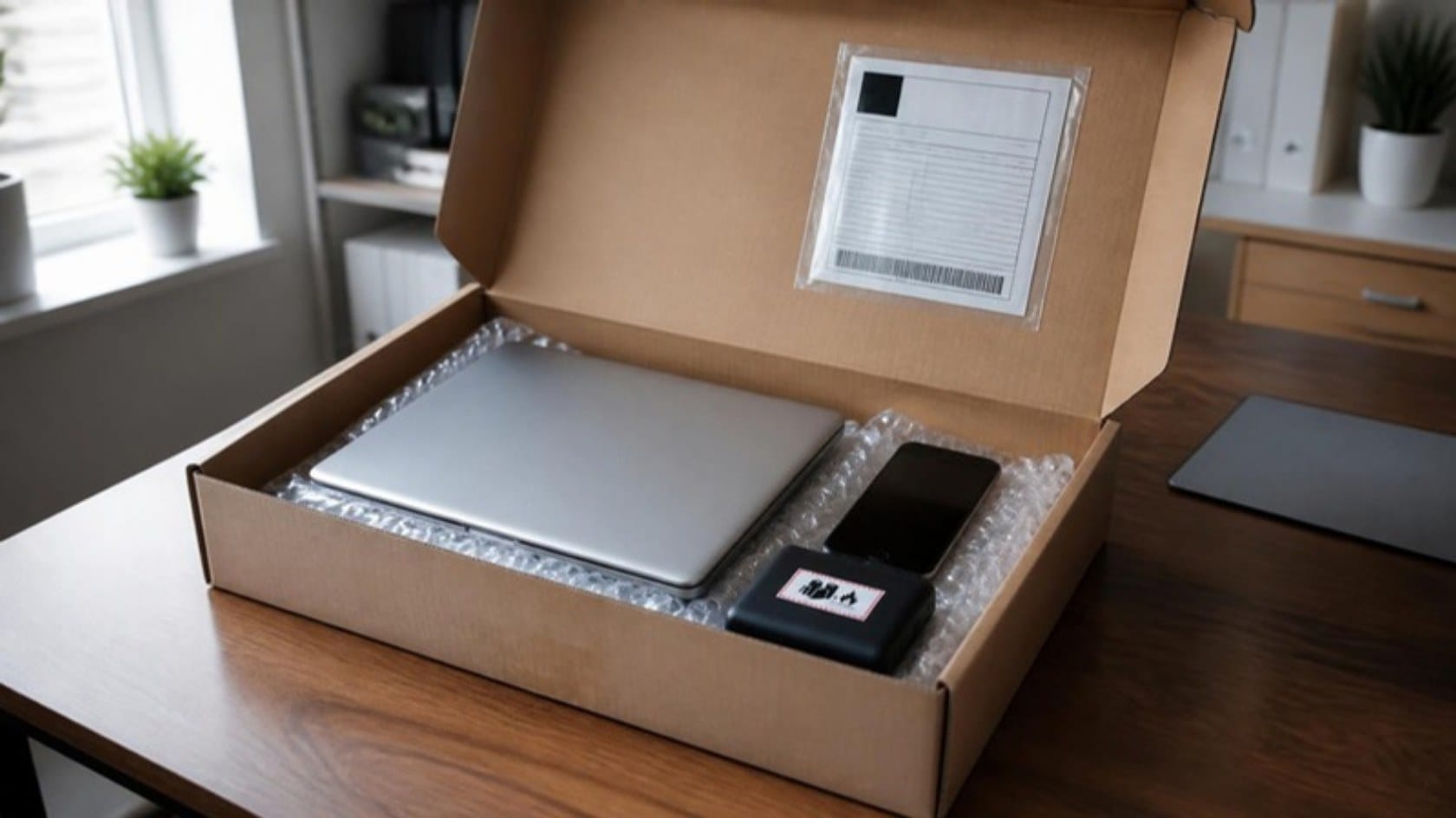
As soon as payment is complete, the property receives an email with the shipping label as a PDF, the pickup details and short packing instructions. No CourierAPP account, password or app is required. Staff print the label and attach it to the parcel.
5. The property hands the parcel to the courier
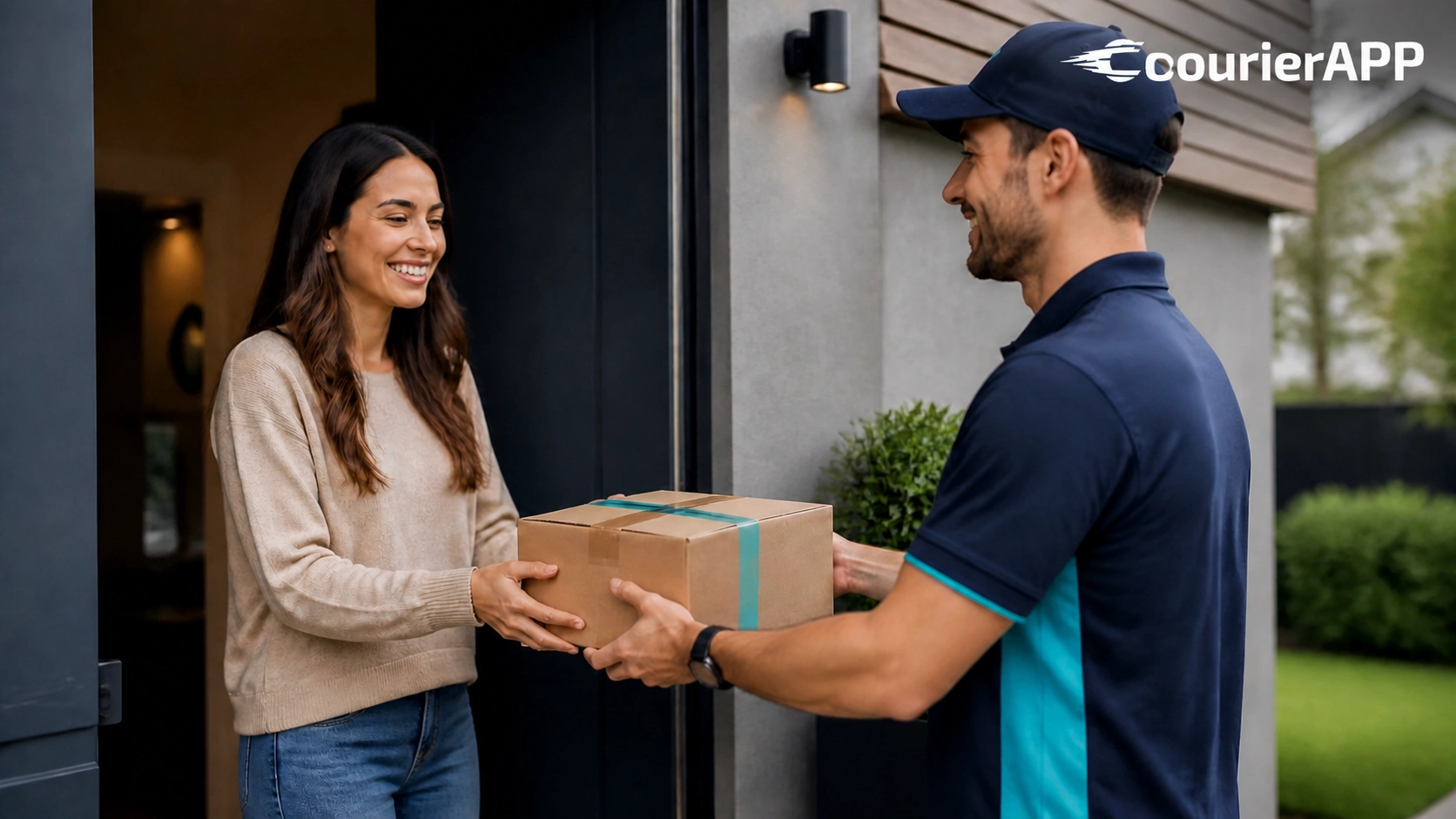
The courier arrives at the property within the scheduled window, collects the parcel and tracking starts from there. The guest receives the tracking number and follows the item live until delivery.
Who does what: guest, property and CourierAPP
The biggest strength of hotel lost and found shipping done this way is the clear split of roles. Once your front-desk team sees the list, they adopt it immediately.
The guest: confirms the item was found, fills in the form, chooses a service, pays, receives tracking and takes delivery at home.
The property: stores the item safely, receives the label by email, packs, attaches the label and hands over to the courier. Nothing else. No payment, no invoice, no trip to a courier shop.
CourierAPP: issues the label, books the pickup with DHL or FedEx, provides tracking and supports both sides in English and Greek.
Why hotels, Airbnbs and villas benefit
Zero cost and zero admin. The property pays no shipping, advances nothing and never has to chase a guest for reimbursement. That financial loose end is the most common reason forgotten items sit in a drawer for months.
Better reviews. A guest who got their forgotten item back within days, without hassle, writes about it. “I left my glasses behind and they were in London three days later” is one of the strongest lines a positive review can contain.
Less time on the phone. Reception no longer explains postal procedures in five languages. They send one link. The Lost & Found page is English-first, with Greek available, so guests from any country understand it.
Worldwide coverage. Visitors to Greece come from everywhere: Germany, the UK, the USA, Australia, Israel, Scandinavia. With DHL and FedEx, the shipment reaches 220+ destinations worldwide with one identical process regardless of country.
No contract. There is no monthly subscription, minimum volume or commitment. Use it once a year or fifty times a season.
How the property packs the item: a practical guide
Packing is the only step where the property adds value with its hands. It is worth doing properly, because good packing protects the item and avoids re-billing for dimension differences.
Small items (chargers, earphones, jewellery, glasses, keys): wrap in bubble wrap or paper and place in a small box or padded envelope. Avoid plain paper envelopes; they tear. An envelope up to 1 kg is the cheapest category.
Clothes and textiles: fold tightly into a bag, then into a box with minimal empty space. Empty space is billed as volumetric weight. If the guest left a lot of clothing, one medium box is cheaper than two small ones.
Electronics (tablet, e-reader, camera): in their original case if available, otherwise wrapped in bubble wrap and immobilised inside the box. Devices with a built-in lithium battery are accepted under conditions; describe them accurately. Loose power banks are not accepted for air transport.
Cosmetics and liquids: perfumes, aerosols and alcohol are restricted or prohibited. Tell the guest that the deodorant spray or perfume cannot travel and proceed with the rest.
Documents (passports, ID cards, bank cards): in a document envelope with the label firmly attached. Tracking matters especially here; the guest is often waiting for the document to travel again.
In every case, put a sheet of paper inside the parcel with the guest’s name and address. If the outer label is damaged, that sheet saves the shipment.
Measuring and weighing: how to avoid billing differences
The price the guest pays is based on the weight and dimensions they declared. The carrier re-weighs and re-measures every parcel; if there is a difference, only the difference is adjusted, transparently. To avoid surprises, the property can help with two simple actions.
First, weigh the packed parcel on a kitchen or bathroom scale and send the number to the guest before they pay. Second, measure the three outer dimensions of the box. Or let the AI measure from a photo with an A4 sheet as a ruler: shipping a parcel with AI gives a first estimate of the dimensions that the user confirms, no tape measure needed.
Photos are used only to calculate the shipment and are not stored for any other purpose. The AI estimate is an assistant, not a verdict; the carrier’s scale always has the last word.
Delivery times, tracking and what to tell the guest
With Express via DHL or FedEx, a forgotten item leaving a Greek property typically arrives in 1–3 business days in most European countries and 2–4 business days in the USA, Canada or Australia. With Economy, allow 3–7 business days within Europe. Times are indicative, not guaranteed; customs checks and local holidays can add days.
Tracking updates at every scan. Tell the guest to follow the link they received and to keep their phone on delivery day; carriers often send an SMS with a time window. For destinations outside the EU (UK, USA, Switzerland), the guest may be asked to confirm that the item is personal property being returned, so no duties are charged as if it were a purchase.
A simple line your reception can use: “We found your item. You can arrange delivery to your address through this link; we will pack it and hand it to the courier at no charge from our side.” Clear, friendly, and free of promises the property cannot control.
How much does returning a forgotten item cost?
The guest sees the cost before paying, VAT included, and it depends on destination, weight, dimensions and service. To give you an order of magnitude when someone asks at reception: an envelope up to 1 kg (charger, glasses, documents) to Germany or another EU country with Express starts from €27.90 incl. VAT, and to the UK from €40.90 incl. VAT. A 2 kg parcel to the EU with Express starts from €34.90 incl. VAT.
These prices are refreshed automatically every week from the live price list. The property does not need to know or quote them; it is enough to tell the guest that the final price appears on the page before payment. For the guest, the amount is almost always lower than the value of the item, and certainly lower than the hassle of replacing it.
Hotel lost and found shipping by property type: hotel, Airbnb, villa
Hotel with a front desk. The simplest scenario: staff on site all day, a printer and a fixed address. Assign one lost-and-found owner per shift and a shelf with dated tags. The CourierAPP label is printed at reception and the parcel waits for the courier there.
Airbnb and self check-in apartments. Usually nobody is at the property. The cleaner finds the item and the manager keeps it. In the form, the pickup address should be wherever the item physically is (the management office or the host’s home), not the apartment. The label can be shown on a phone if there is no printer, but a printed one is safer.
Villas and seasonal rentals. At the end of the season, forgotten items pile up. A lost-and-found round before the villa closes, with a photo per item and a message to each guest of the season, clears the shelf and leaves an excellent impression. Each guest who wants their item pays for their own shipment.
Rooms to let on the islands. DHL and FedEx pickups cover most islands on regular routes, but allow one extra day to the hub. Book the pickup early in the morning and have the parcel ready the day before.
Customs and personal effects: what applies outside the EU
For returns within the European Union there is no customs. For the UK, Switzerland, the USA, Canada, Australia and other non-EU countries, the parcel goes through customs clearance. The right description makes the difference: “used personal effects, returned to owner” together with a realistic declared value shows customs that this is a used personal item, not a commercial shipment.
Even so, some countries may ask the recipient for a declaration or, more rarely, apply a small charge. The property is not involved; the carrier contacts the guest directly. Simply tell the guest that if they receive a message from DHL or FedEx asking for a customs clarification, they should reply promptly so the parcel is not delayed.
As far as the property is concerned, the only responsibility is an accurate description of the contents, so it matches what the guest declared. If the item differs (two chargers were found instead of one, say), tell the guest before sealing the parcel.
Common hotel lost and found shipping mistakes and how to avoid them
Mistake 1: The property offers to pay “to get it over with”. Kind, but it sets a precedent and creates a cost that never closes. The guest-pays flow is fair and internationally expected; most hotels abroad work exactly this way.
Mistake 2: The label goes to the guest instead of the property. In the form, the property is the pickup point and the property’s email is the label recipient. If the guest enters their own email, they simply forward the PDF to the property.
Mistake 3: The parcel is not ready when the courier arrives. The courier does not wait for packing. Prepare the parcel as soon as the label arrives and leave it at reception with a note for the next shift.
Mistake 4: Prohibited contents. Perfumes, aerosols, lighters, power banks, perishable food. If the guest forgot such an item, tell them up front that it cannot fly.
Mistake 5: A vague description. “Personal items” does not help customs. “Prescription glasses, used, personal item returned to owner” does.
Reception checklist: 8 points before the parcel leaves
- The item was identified by the guest (ideally with a photo).
- The guest received the link app.courierapp.gr/lost-and-found and completed payment.
- The email with the label reached the property (check spam too).
- The parcel was weighed and measured; any difference from the declaration was communicated.
- The packaging is sealed with tape, with nothing protruding.
- The label is printed in full, legible and attached to the largest surface.
- A sheet with the guest’s details is inside the parcel.
- The shift on pickup day knows where the parcel is and when the courier is coming.
Hotel lost and found shipping as part of the guest experience
Small details build a property’s reputation. A forgotten item that comes back quickly, at no cost to the property, is one of those details. It signals organisation, respect and an international level of service, especially when the guest compares it with past experiences where “we’ll see” meant “never”.
Hotel lost and found shipping fits naturally alongside CourierAPP’s other solutions for Greek hospitality and tourism: suitcase shipping from Greece for guests who do not want to carry, multi-piece bookings for groups and families, and the traveller’s guide for anyone who left something in a hotel in Greece, which you can share directly with your guests.
If you manage several properties, create one standard message with the link and ask housekeeping to photograph every forgotten item with the date and room number. When the guest calls, the answer is ready in seconds.
Start now
No registration, contract or equipment needed. Next time a guest asks “did I leave something behind?”, answer with one link: app.courierapp.gr/lost-and-found. The guest pays, you pack, the courier collects. Snap it. Ship it. Done.
Frequently Asked Questions
Who pays for hotel lost and found shipping?
Always the guest. They arrange the shipment at app.courierapp.gr/lost-and-found, see the final price including VAT and pay online by card. The property pays nothing, advances nothing and collects nothing; it simply receives the label by email, packs the item and hands it to the DHL or FedEx courier.
Does the property need a CourierAPP account for hotel lost and found shipping?
No. The service works without an account, contract or subscription. The property only needs an email address to receive the shipping label as a PDF and a printer or phone to display it. Everything else, from choosing the service to tracking, is handled by the guest.
What happens if the weight the guest declared differs from the actual weight?
The carrier re-weighs and re-measures every parcel. If there is a difference from the declaration, only the difference is adjusted, transparently, with the guest who paid. The property is never charged. To avoid differences, the property can weigh the packed parcel and send the number to the guest before payment, or the guest can use the AI estimate as a starting point.